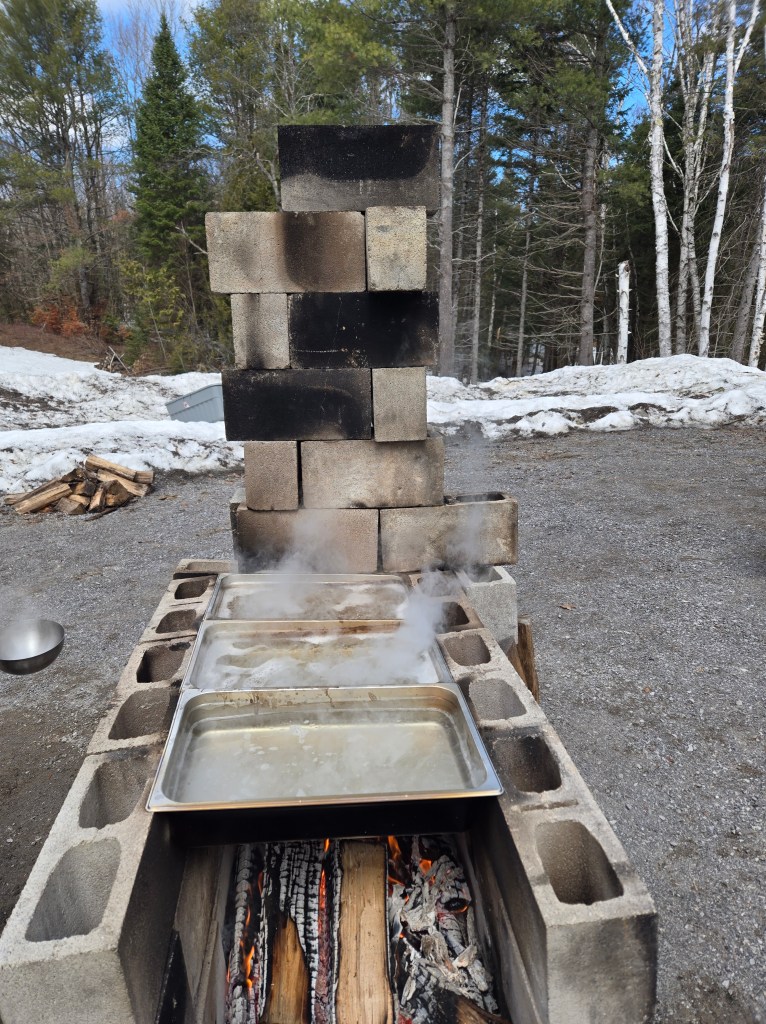
Did you know that sap-to- syrup ratio is 40:1 for maple syrup?
You wonder why it is called Canadian Liquid Gold 🙂
Maple syrup making definitely requires expertise.
It is fun to experiment with the process, especially if you are doing it with friends 🙂
However, when you consider that the sap-to-syrup ratio for maple syrup production is typically around 40:1, it really means you need to know what you are doing. That fun process might end up being inefficient and frustrating at times.
How would you teach the process to someone who has no clue how to make it?
- It involves multiple processes (sap collection, evaporation, filtration, and bottling)
- It heavily relies on weather conditions (unpredictable variables)
- It is labour-intensive
- It requires process knowledge, attention to detail, and some technical and problem-solving skills
Many processes that require expertise are passed along to others. Some of them cannot tolerate much human error or have tight time constraints. Transferring knowledge, wisdom, and skills efficiently becomes really important. It needs to follow a certain structure to make sure all bases are covered.
Just before World War I, Charles Allen, a vocational instructor, developed a method that was used to teach shipbuilding as fast as possible during the war- this later became a key foundation for “Training Within Industry.” The method reduced the time needed for training and minimized human error during production (Interested? Read more about this method here) . We have known this for 100+ years. Yet, we still “struggle to implement effective structure in knowledge transfer!
When it comes to expertise transfer, it needs to cover all bases for efficiency:
- learning principles
- behaviour science
- habit formation
- brain science
- consideration of the learner’s state
We need to consider all these aspects when developing programs based on Subject Matter Experts’ (SME) knowledge.
- If they are the ones facilitating the programs, we need to help them structure the knowledge transfer in a way that serves the learner.
- If we are using them as stakeholders during the design process, we need to extract the information that serves the learner best. We need to think about “Minimum Viable Knowledge”. Most of the time, it is not everything the experts know—it is what is enough for the learner to perform.
These are the two areas I help experts and organizations with:
- Turning expertise into structured, impactful programs
- Enabling SMEs within organizations
⭐What does someone need to know to make maple syrup for their family and friends? And how would you teach it?

